Sand filters made of glass fiber reinforced plastic (GRP) are among the newest and most effective filtration systems in the water and wastewater industry. These filters combine the unique advantages of composite materials, thus revolutionizing the design of water treatment plants. This article provides a comprehensive overview of the properties, advantages, and applications of sand filters made of glass fiber reinforced plastic (GRP).
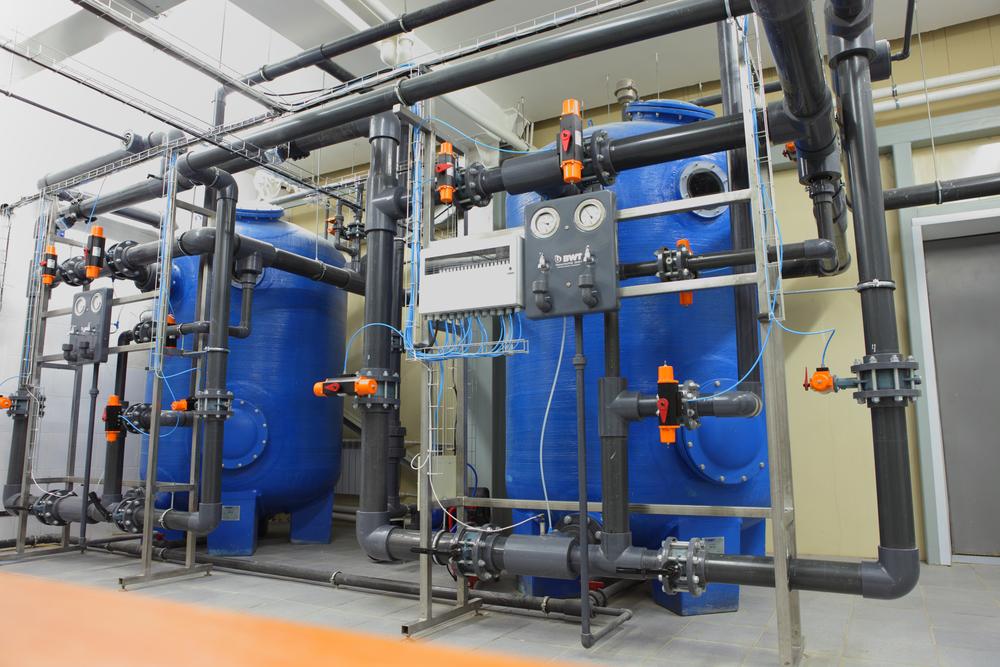 Design and construction of a fiberglass sand filter
Composition and structure of the substance
The filter housing, made of glass fiber reinforced plastic, consists of three main layers:
-
Inner layer :
-
Thickness: 1.5–2.5 mm
-
Material: Chemical-resistant resin (usually vinyl ester).
-
Function: Creates a smooth, corrosion-resistant surface.
-
-
Structural layers :
-
Thickness: 6-12 mm
-
Material: Fiberglass + Polyester resin
-
Function: To ensure mechanical strength.
-
-
Outer layer :
-
Thickness: 0.5–1 mm
-
Material: UV-resistant resin
-
Functional features: weather-resistant.
-
Internal rules
-
Water supply system :
-
The dispenser is made of polypropylene or brass.
-
Designed for even water distribution.
-
-
Filter layer :
-
Depth: 60-90 cm
-
Particle size: 0.4–1.2 mm
-
-
Mounting system :
-
PVC or polypropylene mesh hose
-
Designed to minimize voltage drop.
-
Advantages of fiberglass sand filters
1. Excellent corrosion resistance.
-
Resistant to seawater, acids and alkalis.
-
No screen protector required
-
It has a long lifespan (more than 25 years) in aggressive environments.
2. Lightweight and easy to install.
-
It weighs about a quarter of the weight of a similarly sized metal filter.
-
Installation without the use of heavy equipment.
-
Suitable for mounting on existing surfaces or structures.
3. Reduction of operating costs
-
Corrosion protection or repair measures are not required.
-
Reduced maintenance costs
-
Energy savings through lower pressure
4. Design flexibility
-
Capable of producing products in various shapes and sizes.
-
Individual customization is possible depending on project requirements.
-
Integration of peripheral devices
5. Optimal hydraulic properties
-
The inner surface is very smooth (low roughness coefficient).
-
Reduction of voltage drop in the system
-
Improvement of filtration efficiency
Disadvantages and limitations
1. The initial costs are relatively high.
-
Its price is higher than that of polyethylene filters.
-
This requires a higher initial investment than carbon steel.
2. Sensitivity to electrical discharges
-
Less shock-resistant than metal filters.
-
Be careful when traveling.
3. Temperature restrictions
-
Typical operating temperature range: -40 to 80 degrees Celsius.
-
Resistance decreases at extremely high temperatures.
4. This requires specialized knowledge in the field of repair.
-
Repairs require special materials and methods.
-
Carrying out major repairs on site is difficult.
Main applications
1. Chemical and petrochemical industry
-
Cooling water treatment
-
Initial processing of the processes
-
Water circulation system
2. Marine and coastal industry
-
Seawater purification
-
Seawater desalination system
-
Water treatment for ships and platforms
3. Food and pharmaceutical industry
-
Production of high-quality, purified water
-
ultrapure water system
-
Final cleaning after reverse osmosis
4. Municipal and industrial wastewater treatment plants
-
The final stage of water purification.
-
Secondary filtration system
-
industrial wastewater treatment
Production process
Manufacturing process
-
How to prepare homemade pasta :
-
Suitable for small-batch production.
-
High level of quality control
-
High labor costs
-
-
Fiber winding :
-
Suitable for mass production
-
Excellent rotational stability
-
High production
-
-
Casting (RTM) :
-
Excellent surface quality
-
uniform thickness
-
High initial investment
-
Quality control
-
Ultrasound examination for caries detection
-
Tensile and compressive strength tests
-
Check the wall thickness at different points.
-
hydrostatic leak test
Compared to other types of sand filters
| Special feature | Fiberglass | carbon steel | Steel | specific |
|---|---|---|---|---|
| Corrosion-resistant | Great | weak | Great | Yes |
| Weight | style | difficult | difficult | Very difficult |
| Initial costs | Medium and high | fewer | higher | half |
| Maintenance costs | Very low | higher | half | fewer |
| Service life | 25 years and older | 15-20 years | More than 30 years | More than 40 years |
| Installation time | short | half | half | long |
| Size restrictions | half | A little | A little | strange |
Maintenance and operation
Preventive maintenance plan
-
Regular checks :
-
Check the condition of the exterior surface.
-
Control of accessories and valves
-
-
Regular cleaning :
-
Backwashing procedure
-
Drinking water supply system
-
-
Performance appraisal :
-
Control blood pressure drop
-
Analysis of water quality in wastewater.
-
Common problems and solutions
-
Surface cracks :
-
Cause: mechanical shock or thermal stress.
-
Solution: Repair using a special repair kit made of glass fiber reinforced plastic (GFRP).
-
-
Information leak :
-
Cause: Damaged seal or loose connection.
-
Solution: Replace the seal and tighten the connection securely.
-
-
The indicators have worsened :
-
Reason: Blockage in the distribution system or in the supply line.
-
Solution: Backflush and clean.
-
Innovations in fiberglass-reinforced plastic sand filters.
1. Composite nanomaterials
-
Increased mechanical strength
-
Improved corrosion resistance
-
Reduced permeability
2. Intelligent coatings
-
Self-healing paint
-
Anti-algae and antibacterial coating
-
If damaged, the color of the paint changes.
3. Design Improvement
-
Integrated monolithic design
-
Improvement of the water supply system
-
Lose weight and build strength
Design and construction standards
International Standards
-
ASTM D5364 : Standard for the design of storage tanks made of glass fiber reinforced plastic (GFRP).
-
ASME RTP-1 : Standard for pressure vessels made of glass fiber reinforced plastic
-
ISO 14692 : Standard for fiberglass tubes and fittings
Design considerations for Iran
-
Environmental standards
-
Guidelines of the Ministry of Energy
-
Comprehensive national standards
In conclusion
Glass fiber reinforced plastic (GRP) sand filters offer unique advantages such as high wear resistance, low weight, and long service life, making them ideal for a wide range of industrial and municipal applications. While the initial investment may be higher than other options, their lower life cycle costs and minimal maintenance requirements make them an economical choice in the long run. Advances in composite technology continuously improve the performance and durability of GRP sand filters. For projects requiring filtration systems with high chemical resistance, low weight, and easy installation, GRP sand filters may be the optimal solution.