Modern agriculture, especially in water-scarce regions, relies on pressurized irrigation systems such as drip and sprinkler systems. One of the main problems with these systems is the presence of suspended solids in the water, such as sand, gravel, and algae. These contaminants can clog nozzles and reduce irrigation efficiency. Pressurized sand filters offer an effective solution for removing these contaminants and protecting the system from damage. This article discusses the applications and benefits of pressurized sand filters in agriculture and pressurized irrigation systems, as well as how to select the right sand filter.
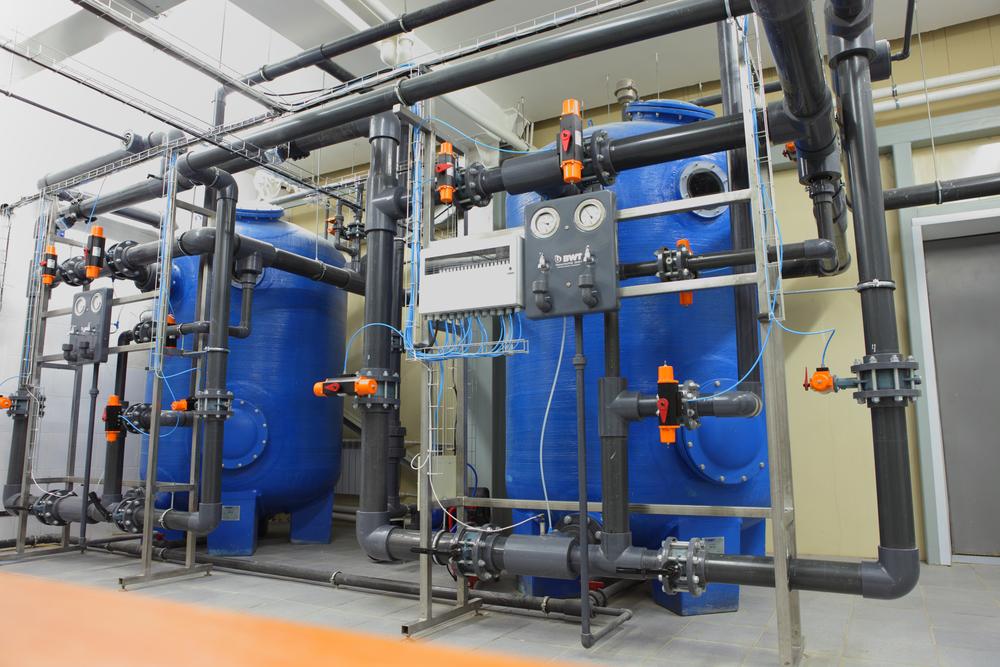 What is a pressed sand filter? And how does it work?
Pressure sand filters are physical filtration systems that use layers of quartz, anthracite, or garnet sand to remove suspended solids and impurities from water. These filters are typically installed in irrigation pipes, where they force the water through the sand layer under pressure.
The main components of a compact sand filter for agriculture are:
-
Pressure vessels (made of fiberglass, steel or galvanized steel)
-
Filter layer (sand with a grain size of 0.4 to 1.2 mm)
-
The water distribution system is located at the top of the filter.
-
The system for collecting the purified water was installed at the bottom of the filter.
-
Flow and pressure control valves
-
Backwash system for filter cleaning
 Use of pressed sand filters in agriculture.
1. Purification of water from wells and underground springs.
Well water often contains sand, gravel, and silt, which can cause problems in drip irrigation systems. Pressure sand filter:
-
Remove particles larger than 20 micrometers.
-
Prevents drip irrigation nozzles from becoming clogged.
2. Cleaning of rivers and surface waters.
Water in rivers and irrigation canals often contains algae, leaves, sand, and organic matter . Sand filtration:
-
It filters out suspended particles and algae.
-
It is used as a pretreatment agent before the use of hard disk or network filters.
3. Used in drip irrigation systems.
Drip irrigation requires extremely clean water, as even the smallest particles can clog the ventilation openings and drippers. Sand filter:
-
Remove small particles.
-
Extend the lifespan of your irrigation system.
4. Application in irrigation
In sprinkler and drip irrigation systems, solid particles can clog the nozzles , causing uneven water flow. Sand filters:
-
This prevents limescale buildup inside the nozzle.
-
Improvement of the uniformity of the water flow.
5. Purification of water in reservoirs for agricultural use.
Agricultural ponds often become breeding grounds for algae and bacteria. Sand filter:
-
It filters out algae and organic matter.
-
This prevents a deterioration of the water quality in the tank.
6. Used in underground irrigation systems.
With this method, the water is directed straight to the plant roots, and the presence of solid particles can clog the pipes . Sand filtration:
-
Avoid overloading the system.
-
Improving irrigation efficiency.
Advantages of using pressed sand filters in agriculture.
 It removes suspended solids, sand and gravel with a size of less than 20-50 micrometers
; prevents the clogging of drip irrigation nozzles and distributors ; reduces
the maintenance costs of the irrigation system ;
extends the service life of pipes and fittings; has
a backwash function for easy cleaning;
and allows flexible adjustment of different flow rates (from 5 to 100 cubic meters per hour).
 How to choose the right sand filter for agriculture.
The following factors should be considered when selecting the optimal pressed sand filter :
1. Water source (well, river, pond)
-
Well water generally only requires simple filtration.
-
More efficient pretreatment and sand filtration processes are needed to clean river water.
2. Required water flow rate (cubic meters/hour)
-
Small garden ← 5-10 cubic meters of filter per hour
-
Large agricultural operations → Filters with a capacity of 50-100 cubic meters per hour
3. Types of irrigation systems (drip irrigation, sprinkler irrigation, subsurface irrigation)
-
Drip irrigation requires more precise filtration.
-
Irrigation with sprinkler system → Medium precision filtration
4. Tank material (glass fiber reinforced plastic, steel, stainless steel)
-
Fiberglass → Lightweight and corrosion-resistant (suitable for use in marine environments)
-
Steel → High strength, but requires corrosion protection treatment.
Maintenance and cleaning of pressed sand filters
Backwashing is required for optimal performance of the sand filter :
-
Backwashing should be performed every two to four weeks.
-
Sand can be removed by changing the direction of the water flow.
-
Backwash time: 5 to 10 minutes, depending on the degree of soiling.
In conclusion
Pressure sand filters are an indispensable solution for agricultural irrigation systems. They remove suspended solids, sand, and algae, prevent nozzle clogging, and improve irrigation efficiency. Proper filter selection and maintenance also extend the lifespan of the irrigation system and save water.
If you are also using a drip or sprinkler irrigation system , a compacted sand filter may be the best option to avoid technical problems and improve performance.
Keywords: Pressure sand filter, drip irrigation, agricultural water treatment, sand filter for irrigation, pressure irrigation system, quartz sand, backwashing of sand filters, prevention of nozzle clogging, well water treatment.