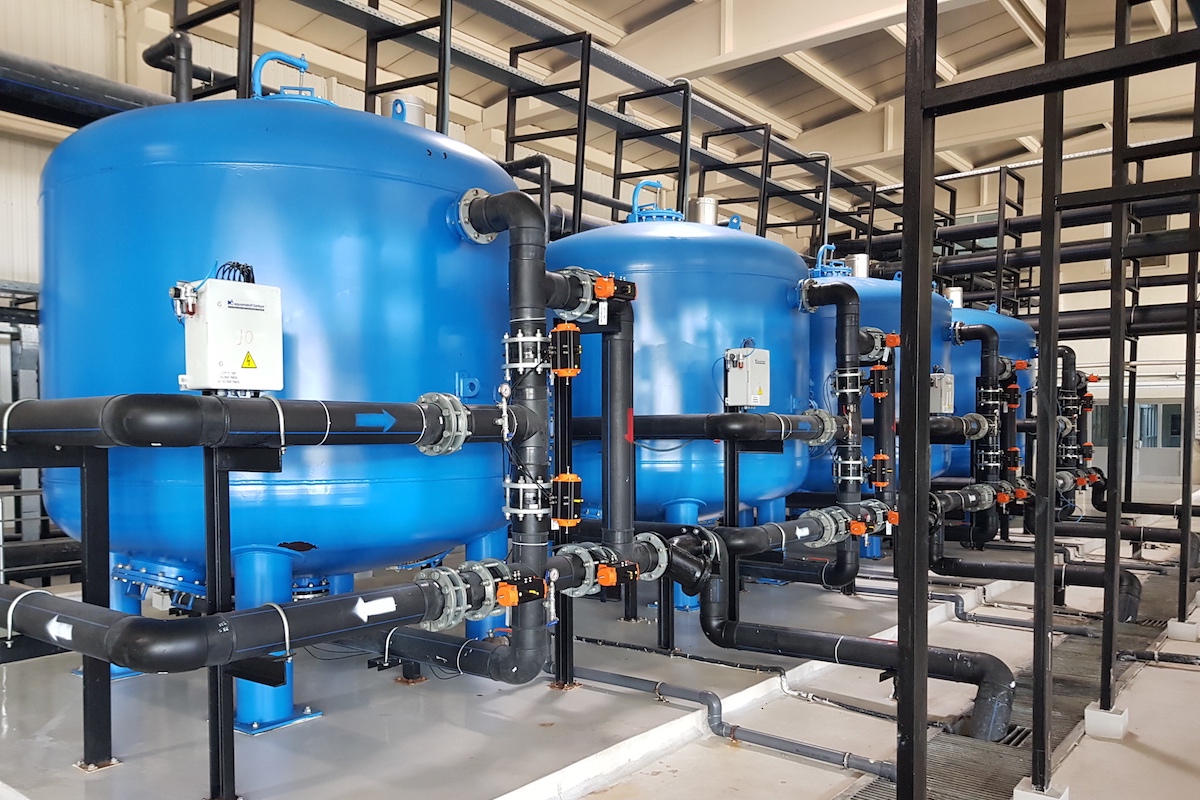
Pressure sand filters are essential components of industrial and municipal water treatment plants and play a key role in removing suspended solids and impurities. A rigorous quality control system for these filters, from design and installation to commissioning, ensures optimal performance and a long service life. This article provides a comprehensive overview of the quality control process for pressure sand filters.
Design and construction standards
Pressure sand filters must be designed and manufactured in accordance with applicable standards:
-
ASME Standard, Volume 8 : Pressure Vessel Design.
-
AWWA Standard B100-09 : Water Filter Manufacturers Association standard .
-
ISO 9001 standard : Quality management systems
-
NSF/ANSI Standard 61 : Applies to materials that come into contact with drinking water.

Quality control during the production phase
1. Verification of raw materials
-
Certification audit for steel materials in the field of ship hulls (MTC)
-
Chemical and physical analysis of the silicon dioxide used.
-
Quality control of the support layer (anthracite, garnet).
2. Monitoring the welding process
-
Non-destructive testing (NDT) includes the following types of testing:
-
X-rays ( RT)
-
Ultrasound examination (ultrasound)
-
Penetration test (PT)
-
-
Visual inspection of nephrons (VIN)
3. Hydrostatic pressure test
-
Perform a pressure test at 1.5 times the operating pressure.
-
Duration of pressure exposure : at least 30 minutes.
-
Check all connections for leaks.
Quality control of key components
1. Water supply system
-
Testing the uniformity of water distribution
-
Check the corrosion resistance of the injector.
-
Functional test of the control valve
2. Filter layer
-
Check the coefficient of uniformity (UC).
-
Corrosion resistance test (ASTM C131)
3. Backwash system
-
Checking the functionality of the air and water valves.
-
Check the backwash flow rate.
-
Test cycle and backwash time
Methods for performance testing
1. Factory Acceptance Test (FAT)
-
Testing of electrical and mechanical performance
-
Testing of control systems and equipment
-
Simulated operating conditions
2. On-site test (SAT)
-
Make sure the devices are installed correctly.
-
Performance tests in a realistic environment
-
Calibration of pressure and flow sensors
3. Performance monitoring
-
Measurement of blood pressure drop
-
Check the quality of the outgoing water (turbidity, suspended solids).
-
Document operational standards regularly.
Preventive maintenance plan
-
Regular checks :
-
Annual inspection of the vehicle body and accessories.
-
Check the condition of the filter layer every 6 months.
-
Monthly inspection of the valve system.
-
Spare parts :
-
The silicon dioxide should be replaced every 5-7 years.
-
Replace the damaged accessory.
-
Management system update
-
Employee training :
-
The railway operators will monitor the situation daily.
-
Basic maintenance training
-
Training on safety precautions when handling pressurized equipment.
Quality control problems
-
Corrosion under certain conditions :
-
Epoxy coatings are used in aggressive environments.
-
Stainless steel is only used in special cases.
-
Reduced filtration efficiency :
-
Continuous monitoring of wastewater quality
-
Ideal configurations for backwashing.
-
Hydraulic problems :
-
Intelligent design of the water supply system
-
Calculate the pressure drop accurately.
In conclusion
The comprehensive quality control process for pressed sand filters comprises three main phases:
-
Quality control during production and assembly
-
Detailed performance tests
-
Continuous monitoring during operation
Adherence to international standards, the use of high-quality materials, and the implementation of preventative maintenance programs are crucial for the optimal performance and long service life of this important piece of equipment. Advances in monitoring technology now make it possible to intelligently monitor and predict compact sand filter failures.